



If your Olathe car has visible swirl marks in the sunlight, a gritty feel across the paint, lingering odors, or stains that no longer wipe away, it is time for a full detail. These are the clearest signs that everyday buildup from Kansas roads, pollen, and road salt has outpaced a basic wash. A full detail deep-cleans, decontaminates, and protects both the interior and exterior before that damage becomes permanent.
Key takeaways
- Rough, gritty paint after washing means embedded contaminants that only a clay treatment and full detail can remove.
- Swirl marks and dull finish in direct sun signal it is time for paint correction, not just another wax.
- Road salt and ice scratches from Olathe winters are the top seasonal trigger for a detail here.
- Interior odors, stains, and hazy headlights are just as important as the paint and affect resale value.
- Two full details a year, timed for spring pollen and post-winter salt, keep most Johnson County vehicles in top shape.
Why Olathe Weather Is Hard on Your Car

Cars in Olathe take a beating that drivers in milder climates never deal with. Our winters bring freezing rain, ice, and the brine and rock salt that Johnson County and KDOT crews spread across I-35, K-10, and neighborhood streets. That salt clings to lower panels, wheel wells, and the undercarriage, where it quietly accelerates corrosion. Come spring, heavy tree pollen coats every horizontal surface, and by midsummer, intense UV and sudden hailstorms add their own wear.
According to the U.S. Environmental Protection Agency, road salt and de-icing chemicals are a known contributor to vehicle corrosion, which is exactly why a post-winter decontamination matters in a place like Olathe. If you have noticed white residue creeping up your rocker panels after a snowy stretch, your car is telling you it needs attention. Our guide on how to remove road salt stains from car paint walks through why this buildup is more than cosmetic.
Exterior Signs Your Car Needs a Full Detail
The outside of your car shows the first and most obvious clues. Watch for these:
- Gritty texture after a wash. Run your hand over a freshly washed, dry panel. If it feels like fine sandpaper, contaminants like rail dust, brake particles, and pollen have bonded to the clear coat.
- Swirl marks and spider-webbing. Step into direct Kansas sun and look at the hood. Fine circular scratches mean improper washing over time, and they need paint correction to remove.
- Water no longer beads. When rain sheets flat across the paint instead of beading up, your wax or coating has worn off and the surface is unprotected.
- Ice and salt scratches. Scraping ice off panels leaves fine marring. Our post on removing ice scratches from car paint covers what can be buffed out and what cannot.
- Dull, oxidized finish. Paint that looks chalky or faded, especially on red and black vehicles baking in summer sun, needs correction and fresh protection.
If you are unsure whether you need a wash, a detail, or full paint correction, the difference between paint correction and waxing clears up which service actually fixes what you are seeing.
Interior Signs You Should Not Ignore
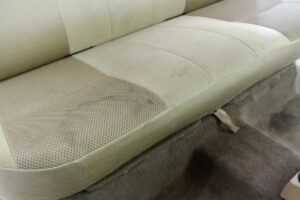
A car can look clean from ten feet away and still need a full interior detail. Common signals include:
- Lingering odors from spilled coffee on the morning commute up I-35, gym bags, pets, or trapped moisture after a rainy week.
- Set-in stains on cloth seats and carpet that surface cleaning no longer lifts.
- Dust and grime in vents, cupholders, and seams, where Olathe’s spring pollen collects and recirculates through your HVAC.
- Sticky or hazy touchpoints on the steering wheel, shifter, and dash from months of hand oils and UV exposure.
Beyond comfort, a clean interior protects your investment. If you are thinking about selling, see how auto detailing improves your car’s resale value before you list it.
Cloudy Headlights Are a Sign Too
Foggy, yellowed headlights are more than a cosmetic issue. Oxidized lenses cut down your light output on dark Olathe backroads and can be a safety concern in winter fog and early-sunset months. If your headlights look hazy, that is often part of the same neglect cycle that calls for a full detail. Restoring them is usually far cheaper than replacement, as we explain in our breakdown of whether restoration is cheaper than replacing headlights.
How Often Should Olathe Drivers Get a Full Detail?
For most Johnson County vehicles, two full details a year works well: one in spring to strip away winter road salt and pollen buildup, and one in fall to prep and protect the paint before ice and brine season returns. Daily commuters, families hauling kids and gear, and anyone parking outdoors may benefit from quarterly service. If you garage your car and drive less, once a year plus regular washes may be enough. Our take on how often you should get your car detailed in spring digs into the seasonal timing.
When those signs stack up, do not wait for them to become permanent. Reach out through our contact page to schedule a full detail and we will assess your paint, interior, and headlights together.